
Read the Russell County Owner-of-Record Details
The Commissioner confirms the office keeps real-estate ownership and assessment records, though its help page does not spell out every parcel-card field. Treat the details below as items to verify across county sources. The Treasurer's help lists the account number and GPIN as search keys. The deed adds the parties and legal description for the conveyance itself.
| Owner of record | Name associated with the Commissioner's ownership record; verify the exact current entry. |
|---|---|
| Grantee and vesting | Party and interest named by the latest recorded deed. |
| Mailing address | Tax correspondence destination; not evidence of occupancy. |
| Situs or legal location | Address plus the deed's tract, lot or metes-and-bounds description. |
| GPIN / account | Assessment and bill keys; exact spaces matter in the Treasurer search. |
| Recording date | When the instrument entered the public land record, not necessarily the closing date. |
The owner of record is whoever the record names. Occupants and owners are not the same people. An owner may also list a mailing address in another town or state. The county publishes no roll-refresh schedule. A fresh deed can show up in the Clerk's index before the assessment screen changes. To answer the current-owner question, compare both dates rather than either one alone.
The Commissioner Starts the Current Owner Check
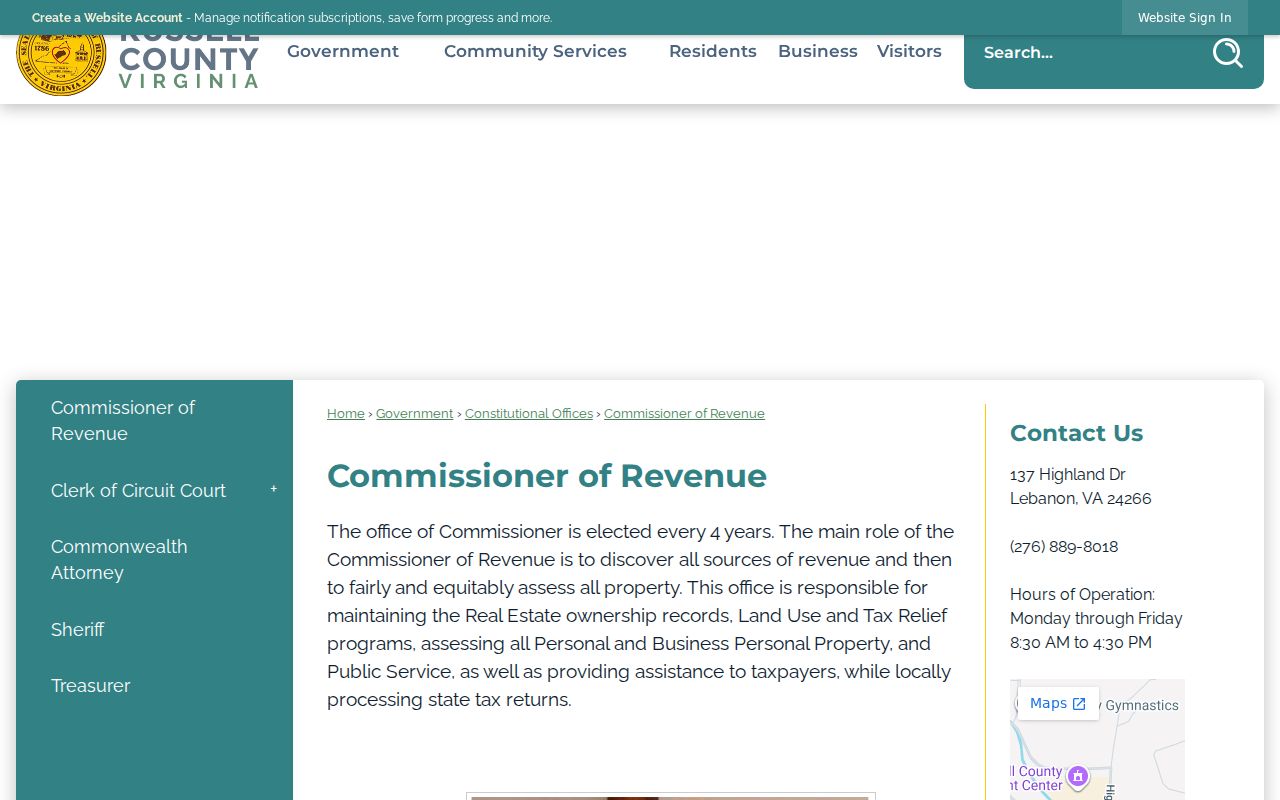
The Commissioner of Revenue maintains real-estate ownership records, assessments, land-use programs, and tax-relief information for Russell County. Its real-estate public search is the starting point online. Result fields and update timing are not published in detail. Search by address or GPIN. Note the account, and call the office when a name, mailing address, or assessment looks off.
The office sits at 137 Highland Drive in Lebanon. It posts a GIS Information Service subscription form along with assessment and relief forms. Those are assessment resources. Tax balances and payment history belong to the Treasurer. A current owner lookup should keep that line clear, because an amount due proves nothing about who took title. The county's Commissioner of Revenue page describes its real-estate duties.
When a just-closed transfer has not reached the roll yet, ask the office for the current record date.
Confirm the Current Owner Against the Latest Deed
A deed is the instrument that transfers an interest in land. The assessment roll is a separate administrative record. To confirm a current owner in Russell County, line up the latest deed's grantee, recording reference, and legal description. Match them against the Commissioner entry for that parcel. A newly recorded deed warrants a call to the Clerk about the instrument. The Commissioner should hear about the roll. Neither search alone guarantees every interest is clear.
- Identify the parcel by its address or GPIN and record the account key.
- Read the Commissioner ownership entry and note its date if the screen supplies one.
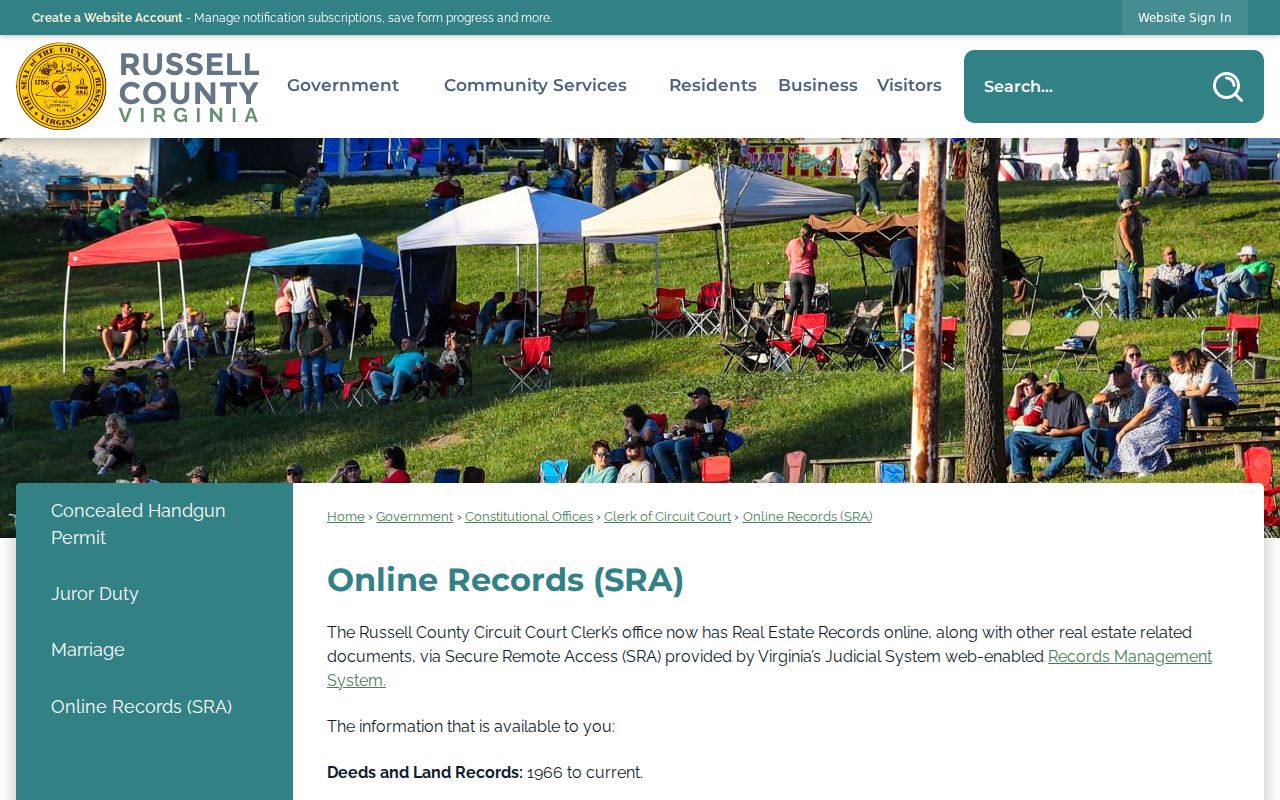
- Search the Circuit Clerk SRA index for the newest deed into that owner.
- Compare grantee, legal description, recording date and any stated vesting.
- If names differ, ask both custodians about timing and inspect the actual instrument.
- Owner of record
- The name associated with an assessment or recorded instrument.
- Vesting
- The wording that identifies the grantee and conveyed interest.
- Registered agent
- A contact named in business filings; not automatically the landowner.
The statewide SRA entry point opens Virginia land-record searching; Russell's Clerk controls local access.
For the general method of tracing an owner from an address, see the who-owns-property guide.
A Recent Russell County Deed May Beat the Tax Roll
The Commissioner maintains the ownership roll. The county publishes no fixed schedule for how quickly it changes after recording. A sale, inheritance, or court transfer can therefore surface first in the Clerk's land index. Compare the deed's recording date with any date shown for the assessment information. Remember that the closing date and the recording date can differ. Neither matches the moment an online roll refreshes.
When names disagree, start with the land itself. Confirm the deed describes the same parcel. Then check whether it conveyed only a partial interest. Check whether an estate or court commissioner acted. Check whether a later document changed the interest. Ask the Clerk to identify the record and the Commissioner about update timing. Never just pick the newer name without resolving the description and the instrument.
Keep a comparison note. It should list the GPIN, legal description, recorded instrument number, deed date, and any date on the assessment entry. If the deed covers one undivided share or a different tract, both names can be accurate for different interests. If it clearly conveys the whole parcel, ask whether another instrument followed it. Ask also when the roll updates. There is no standard lag period, so get any date estimate from the office itself.
Read Entity and Estate Names in the Present Record
A current Russell County deed may vest land in an LLC, corporation, trust, executor, administrator, or court-appointed commissioner. A Virginia SCC entity search shows filing history and a registered agent for a business. But it cannot tell you which person owns the property. The deed stays the source for the grantee and the interest conveyed. Trust beneficiaries and company members rarely appear in the land record.
For an estate transfer, look at the will, qualification, fiduciary file, or chancery decree behind the conveyance. Russell's SRA wills and fiduciaries category begins in 1999. The Library of Virginia finding aid lists older books and indexes. An estate name lingering on a tax roll usually reflects administration or timing. It does not signal a new deed. Verify the recorded transfer before treating an heir or fiduciary as the present owner of record.
InteractiveGIS Is Not the Current Owner Register
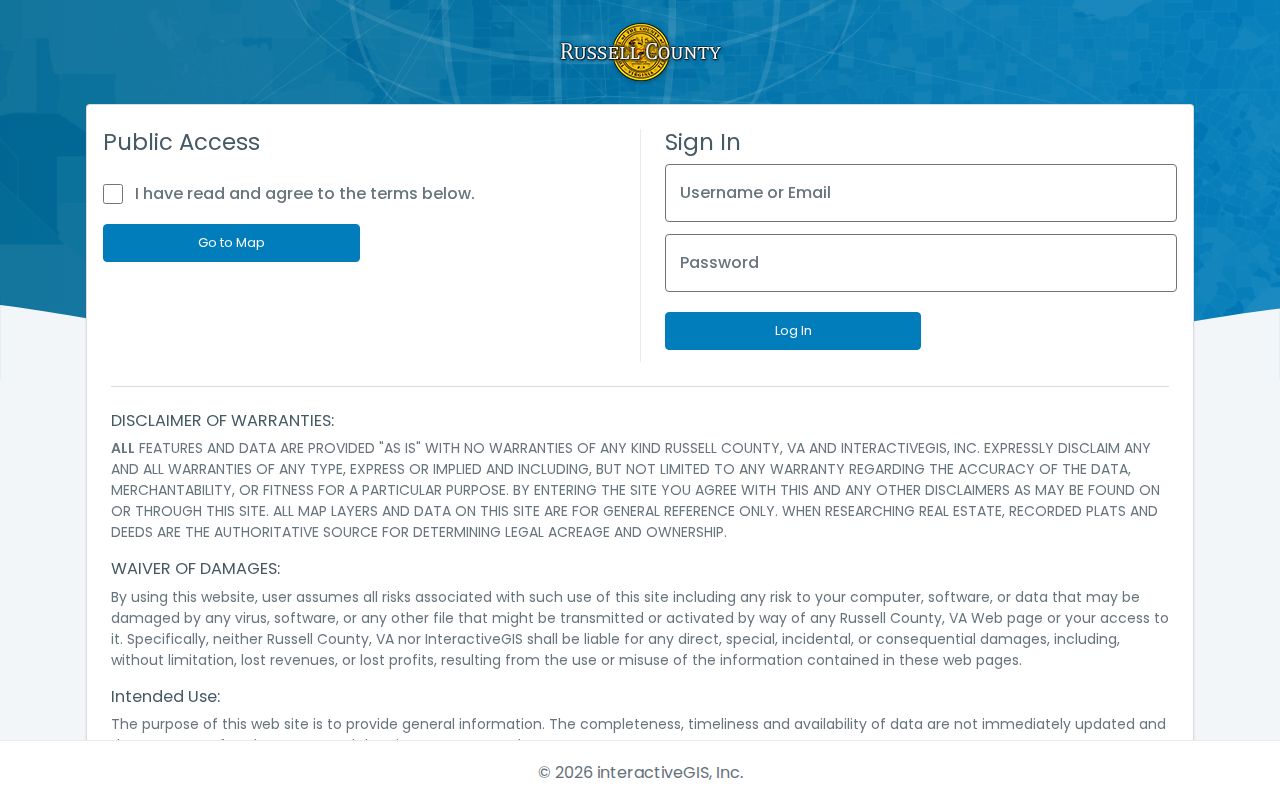
The Russell InteractiveGIS public terms are blunt about limits. Data may be incomplete, and it may lag behind recent filings. For legal ownership and acreage, the terms point users elsewhere. Deeds and plats govern, not the map. An update stamp of July 17, 2026 means only that the site refreshed that day. It cannot prove every parcel label caught the latest conveyance. Treat the GIS viewer as a locating tool. Find the parcel and study its surroundings. Then verify the owner of record in the Commissioner's records and the deed index.
A boundary or legal-description dispute calls for the recorded instrument and the plat. A screen line is not a survey. Remember that the tax map, the assessor record, and the deed each answer a different question. Any current-owner conclusion rests on their dates and document coverage. The county's InteractiveGIS access page spells out the map's limits.
A map caption or point label should not override a more recent recorded instrument.
Use the Mailing Address Only for Property Correspondence
A tax mailing address on a Russell County tax bill is where correspondence goes. It is not necessarily where the owner lives. It is not the property's situs either. A company might list a business address for its Russell County parcel. An individual may have bills sent elsewhere. An estate may rely on a fiduciary's address instead. Remember that privacy limits in public-record law keep protected voter and vital-record information separate from the land records maintained by the county recorder.
Lawful use. Use ownership details for a property question or documented diligence. Do not use a current owner record or mailing address to stalk, threaten or harass anyone.