
Build a Russell County Ownership Timeline by Record Era
Start with the newest deed and step back one transfer at a time. Russell's county SRA page reports deeds and land records online from 1966 to the present. For anything older, the Library of Virginia lists deed books and general indexes. It also lists surveyors' books, land-entry books, mechanics' lien records and chancery material. Each era points to a different place where former owners can be checked. The deed chain itself still has to be built from the instrument references. These references cover the parcel you are studying.
| Source | Years It Covers | Where Held | What It Shows |
|---|---|---|---|
| Virginia SRA / COVERS deeds and land records | 1966–current, per county page | Circuit Court Clerk via state system | Recent grantors, grantees and land instruments. |
| Russell deed books and general indexes | Books 1787–1902; indexes 1787–1917 | Library of Virginia finding aid / microfilm; Clerk for local records | Earlier transfer parties and book references. |
| Survey and land-entry books | 1786–1908 and 1786–1927 | Library of Virginia Russell collection | Older tract origins and description clues. |
| Chancery causes | 1840–1960; digital images 1840–1933 | Library of Virginia and Clerk | Partition, estate and title disputes that explain transfers. |
A transfer dated after 1966 begins in SRA. Earlier deeds call for the general grantor or grantee index, which leads to the right bound book, and then the instrument itself. Heir and partition transfers add another layer. Wills, fiduciary books and chancery files often explain those conveyances. The Commissioner ownership roll can suggest a current owner of record, but its historical coverage years were never stated. Treat it as a pointer, not a complete year-by-year archive.
| Transfer date | Grantor → grantee | Deed type | Book / page or instrument |
|---|---|---|---|
| Use date printed on newest deed | Current deed's grantor → grantee | Read title and operative text | Copy the filed reference |
| Use prior deed's recording date | Prior grantor → prior grantee | Compare the conveyed interest | Open the index reference |
| Continue until online coverage ends | Search prior grantor as grantee | Check deeds, fiduciary or court conveyance | Move to book and page / microfilm |
Treat this as a chain-building worksheet, not a sample history for one named parcel. Fill every row from a recorded instrument, and confirm the legal description tracks the same tract throughout.
The 1872 Russell County Fire Left Uneven Evidence
The 1872 Clerk's office fire gets blamed for a lot. But the Library of Virginia finding aid is precise about what it destroyed: the first marriage register, most loose papers and Will Book 1. It does not claim every land book vanished. Bound deed, court-order and later will volumes largely survived. So a former-owner search in Russell County deed records needs one distinction. Separate a missing supporting file from a conveyance that was duly recorded. When a chain appears to stop, check the deed books, indexes, surveys, wills and chancery before concluding the record burned.
The oldest Russell County deed book opens in 1787. That is one year after the county formed from Washington County. A modern owner search leans on an address and GPIN. Older entries instead identify a tract by survey, creek, road or adjoining landholder. That shift in description is a research challenge, not proof that ownership broke.
The Library of Virginia Russell County microfilm guide lists the book series. It also carries the fire note.
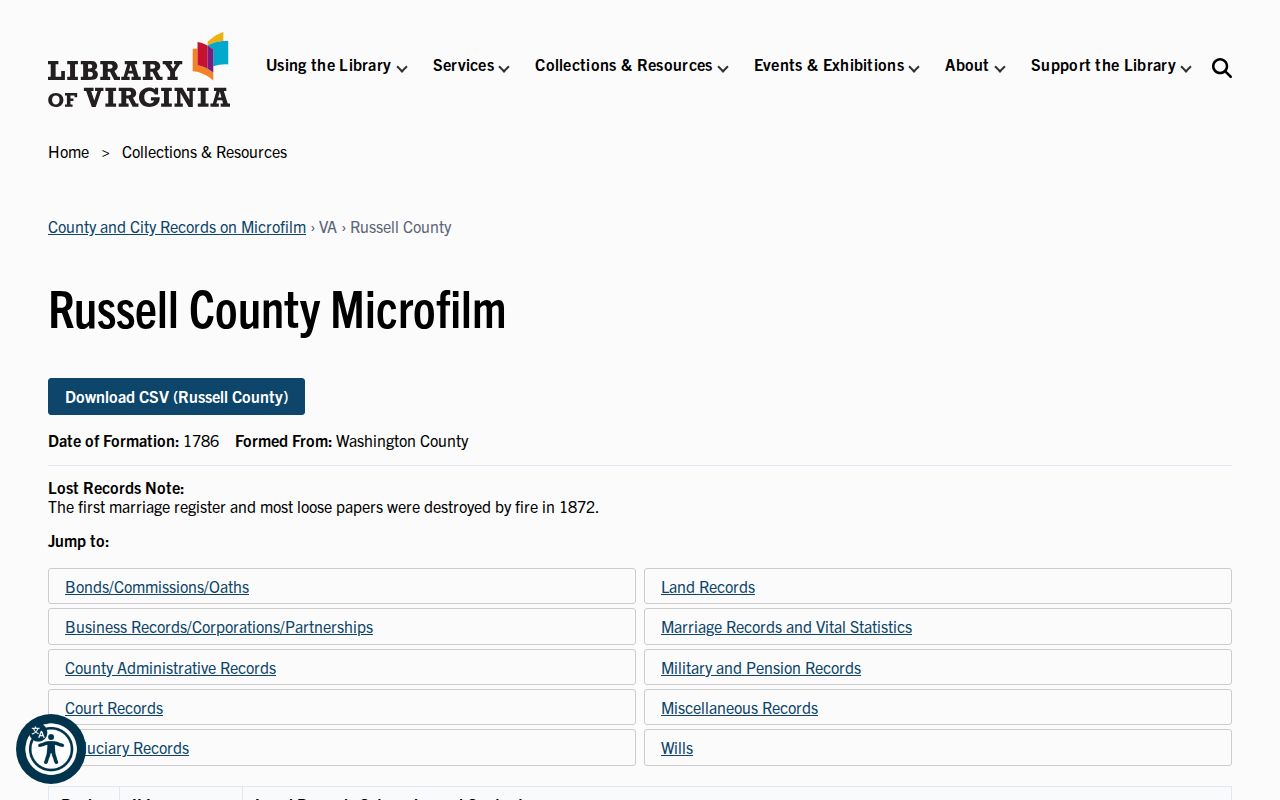
The fire note describes lost record series, not the fate of any particular deed.
Walk Back Through Russell County's Grantor-Grantee Index
The backward method takes the current grantee. It uses the deed's prior grantor as the next search name. Names alone won't carry the chain, though. Match the full legal description, acreage if stated, adjoining references, instrument date and the interest conveyed. A quitclaim, fiduciary deed, partition or partial conveyance may move a different estate. That estate can differ from a standard sale deed. When an index result refuses to line up, try spelling variants, initials and entity names.
- Locate the latest deed into the present grantee using the parcel or known name.
- Record grantor, grantee, legal description, instrument reference and recording date.
- Search the prior grantor as a grantee and confirm the matching tract.
- Repeat backward, noting whether an estate, commissioner or partition supplied the next deed.
- At the 1966 online cutoff, move to the LVA index and deed-book series.
- Grantor
- The party conveying an interest.
- Grantee
- The party receiving the interest.
- Chain of title
- The ordered series of instruments affecting the same property.
- Reverse index
- A way of using a prior grantor as the next grantee search.
- Warranty vs quitclaim
- Different deed language and promises; read the instrument rather than relying on its short label.
Estate and Partition Files Explain Russell County Transfers
Not every ownership change begins with a buyer and a seller. A will, an executor's qualification, a fiduciary settlement, a partition, a commissioner's deed or a chancery decree may explain a transfer. Land may pass to heirs. It may also be split apart by court order. Russell's SRA category for wills and fiduciaries starts in 1999. Older books and indexes appear in the Library of Virginia finding aid. Chancery causes run from 1840 through 1960. Digital images cover 1840–1933. Indexed or original material follows after that.
Whenever a deed names an estate or a court actor as the grantor, pull the case or fiduciary file. It can reveal heirs, shares, tract boundaries and the authority for the sale. The later deed still belongs in the land chain. Chancery is often indexed by people rather than by modern parcel number. Names and legal-description clues do the heavy lifting. The Library of Virginia chancery index shows Russell's cause coverage.
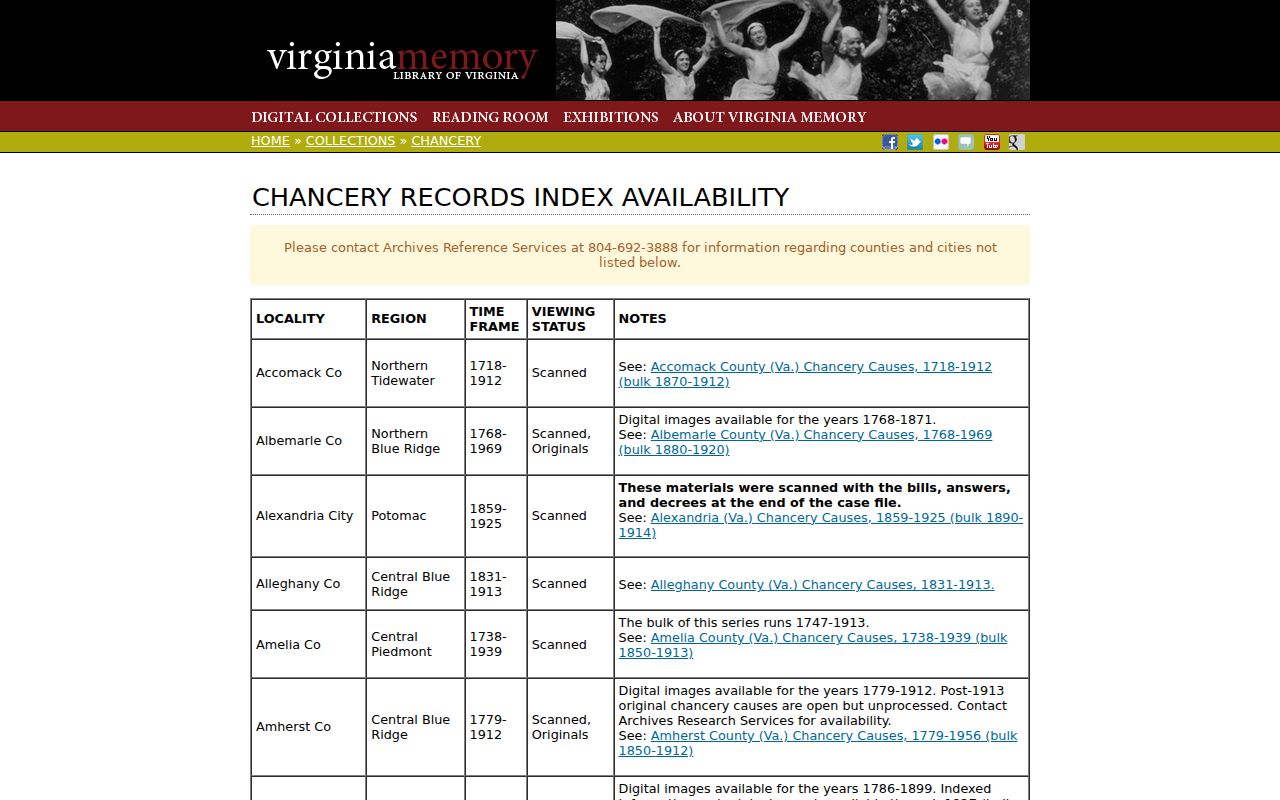
Use the case file as context for a deed. Never treat it as a replacement for the instrument recorded in the land books.
Older Russell County Deeds May Not Use a Street Address
Russell is a rural Appalachian county. Its older property descriptions lean on tract names, land entries, survey references, metes and bounds, roads and neighbors. A modern town name or postal ZIP cannot bridge an old book entry to a current parcel. Pull the legal description from the latest deed first. Then follow that language backward through the deed records. Surveyors' books from 1786–1908 and land-entry books from 1786–1927 can explain a tract. They cover eras long before any numbered address existed.
The Library finding aid also lists an 1889 Town of Cleveland map. That source suits a historic town lot. The current deed and plat establish the modern parcel. Watch for coal rights, rights of way, title bonds and partitions in the older language. Those instrument types matter too. The record series runs far broader than simple sale deeds.
Start With Today's Grantee and Step Back
Every deed is one link in a chain. Start with the newest recorded transfer. Read the grantor who conveyed the land to the current grantee. Then search that person as a grantee in an earlier deed. Keep stepping back through the deed records the same way. At each step, match the instrument reference and the property description, not just the surname. Names repeat across generations. A family tract can also pass through an estate or a company. A familiar name alone proves nothing about ownership.
- Use the current grantee or known deed reference to locate the newest conveyance.
- Copy its grantor, full legal description and recording reference.
- Search the grantor as grantee and compare the same tract in the earlier instrument.
- Repeat through transfers, estates and partitions until the online index ends.
- Continue with the historic deed index and the book series for pre-1966 transfers.
- Grantor / grantee
- Conveying party / receiving party named in the deed.
- Chain of title
- The connected series of past conveyances for the same land.
- Legal description
- The tract language used to match old instruments when an address is absent.
Switch Sources at the Russell County 1966 Cutoff
Russell County's online deed and land-record coverage starts in 1966. The separate SRA categories begin in other years. Wills, judgments, and miscellaneous liens each have a different online boundary. For a longer reach, turn to the Library of Virginia's historic series. It holds deed books from 1787 through 1902. Grantor and grantee indexes run through 1917. Land entries extend through 1927, and surveyors' books reach 1908. That stretch covers most of the county's recorded history.
The handoff between sources matters for former-owner work. An empty SRA result before 1966 reflects a coverage limit. It does not mean a broken chain of title. Instead, find the prior owner's name or the parcel description in the historical index. Note the book reference. Then consult that deed volume directly. Ask the Clerk's office about local originals or public terminals. The office sets its own copy fees and counter procedures, so confirm those details when you contact it.
Russell County Ownership Records Reach Back to 1787
Russell County's surviving deed series opens with Book 1 in 1787. The county itself formed a year earlier, in 1786. The general grantor and grantee indexes run to 1917. Deed books through 1902 appear in the finding aid. Land-entry and survey books begin even earlier, in 1786. That is a deep historical trail. Fire loss and the fragility of loose papers, however, mean not every supporting record survives. A complete chain may also require a deed from Washington County. That would apply to land predating Russell itself. Verify the jurisdiction and book references. Never assume the modern county name applied across the whole history.
Keep the work organized. A dated chain table with noted gaps beats guesswork every time. Never fill a gap with a same-name assumption. For requesting a single document copy, the Russell County deed-record guide walks through Clerk and SRA access route in detail.
Lawful use. Former-owner research supports house history, estate work and property diligence. Do not use names in old deeds to track, target or harass a living person.