
Find Who Owns the Russell County Parcel, Then Verify It
Start with the address, not the owner's name. Identify the parcel first, then check the recorded deed. Russell County's Treasurer supports three documented search fields. You can search by account number, by a correctly spaced GPIN or Tax Parcel ID, or by street name without a house number. The Commissioner of Revenue maintains the ownership records. The public inquiry, however, offers no owner-name field. Because no single name box finds every holding, the dependable route begins with a known address or parcel key and finishes with the newest deed. That transfer record, not the inquiry screen, is the final word on who owns the parcel.
- Search the Treasurer inquiry by street name without its number, account number or the GPIN copied with exact spaces.
- Use the parcel key to review the Commissioner's ownership record and the property's tax account.
- Search the Circuit Clerk's SRA index for the newest deed and compare grantor, grantee and legal description.
- If a business is the grantee, check its official Virginia SCC entity record; if an estate appears, check fiduciary and probate records.
- Use the mailing address only as a correspondence clue, not as proof of who occupies or controls the property.
The page on the current owner of record explains how to handle a gap between the tax roll and a recent deed. Sometimes the two records disagree.
Which Russell County Record Names the Owner?
Several custodians hold Russell County owner information. The Commissioner of Revenue keeps the real-estate ownership records. The Circuit Clerk records the deed naming a grantee. The Treasurer connects an account to its bills and payment history. InteractiveGIS can help you locate a parcel, though its public terms page warns that map data may lag the freshest filings. Treat a map label or a tax bill as a lead, and confirm the owner against the deed before relying on it.
| Source | Owner Info It Gives | Access |
|---|---|---|
| Commissioner ownership record | Assessment-side owner information; exact public result fields and refresh timing were not documented. | County real-estate search and Commissioner office. |
| Circuit Clerk deed index | Grantee named in the latest recorded conveyance. | Virginia SRA / COVERS; Russell images require the county access process. |
| Treasurer account | Parcel/account key, detail and payment-history screens. | Public inquiry by account, GPIN or street name. |
| InteractiveGIS | Parcel location context; selected owner card was not verified. | Terms and sign-in; map data are reference only. |
An owner of record is the party shown in a public record. An occupant is whoever uses the premises. The two are often different people. A mailing address on the roll may point to a business office, a family member, or another tax destination. Neither record confirms who lives there. Keep the search focused on the recorded interest, and do not infer personal residence from an address field.
- Owner of record
- The person or entity named in an assessment or recorded instrument, subject to that record's date and purpose.
- Grantee
- The recipient of an interest in a deed.
- Vesting
- The way an instrument names the grantee and the interest conveyed.
- Situs address
- The property's physical location or service address.
- Mailing address
- Where tax correspondence is directed; not proof of occupancy.
The Treasurer's help page describes the county real-estate inquiry's account, GPIN, and street search keys.
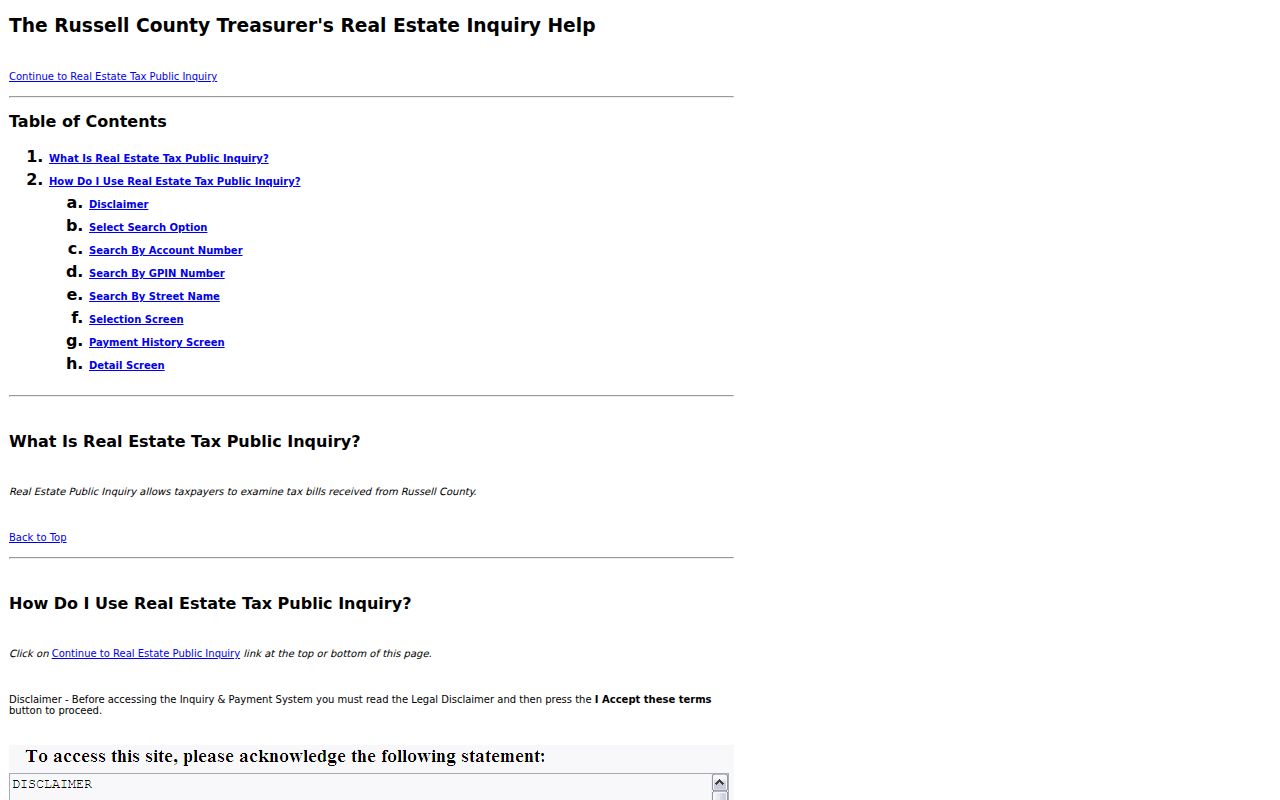
Carry the exact GPIN into later searches because Russell's help warns that spaces matter.
When a Russell County Owner Is a Trust, Company or Estate
The deed may name an entity, not a person. A limited-liability company or corporation can be checked in the Virginia SCC Clerk's Information System. That filing is not title, though. A registered agent or company officer is not automatically the owner of the land. The deed establishes which entity took title. If the grantee is an estate, executor, administrator, or commissioner, look for the will, qualification, fiduciary record, or court decree that authorized the transfer.
Russell's online SRA category for wills and fiduciaries begins in 1999. Older material sits at the Library of Virginia. Its finding aid lists early will books, devisee and devisor indexes, and fiduciary settlement books. Will Book 1 was destroyed in the 1872 fire. Other bound volumes survive. When a property still carries an estate name on the assessment roll, the deed or probate file usually explains the timing.
Use the Newest Russell County Deed as the Transfer Check
The Commissioner record finds an owner name fast. A transfer can be recorded first, though. The tax roll may lag the deed. The latest deed in SRA gives the parties, the recording reference, and the legal description of the conveyance. Compare the grantor to the prior owner. Then compare the grantee to the assessment record. If the names disagree, the deed may cover only a partial interest, be a fiduciary conveyance, or precede a pending roll update. Ask the Clerk about the document and the Commissioner about the roll.
Russell's county SRA page lists deed and land records from 1966 to current. Viewing images requires paid account approval. Earlier owner history lives in deed books and indexes at the Library of Virginia. The deed-record guide explains how to follow the grantee and grantor indexes backward.
The statewide court site links to Virginia's land-record system.
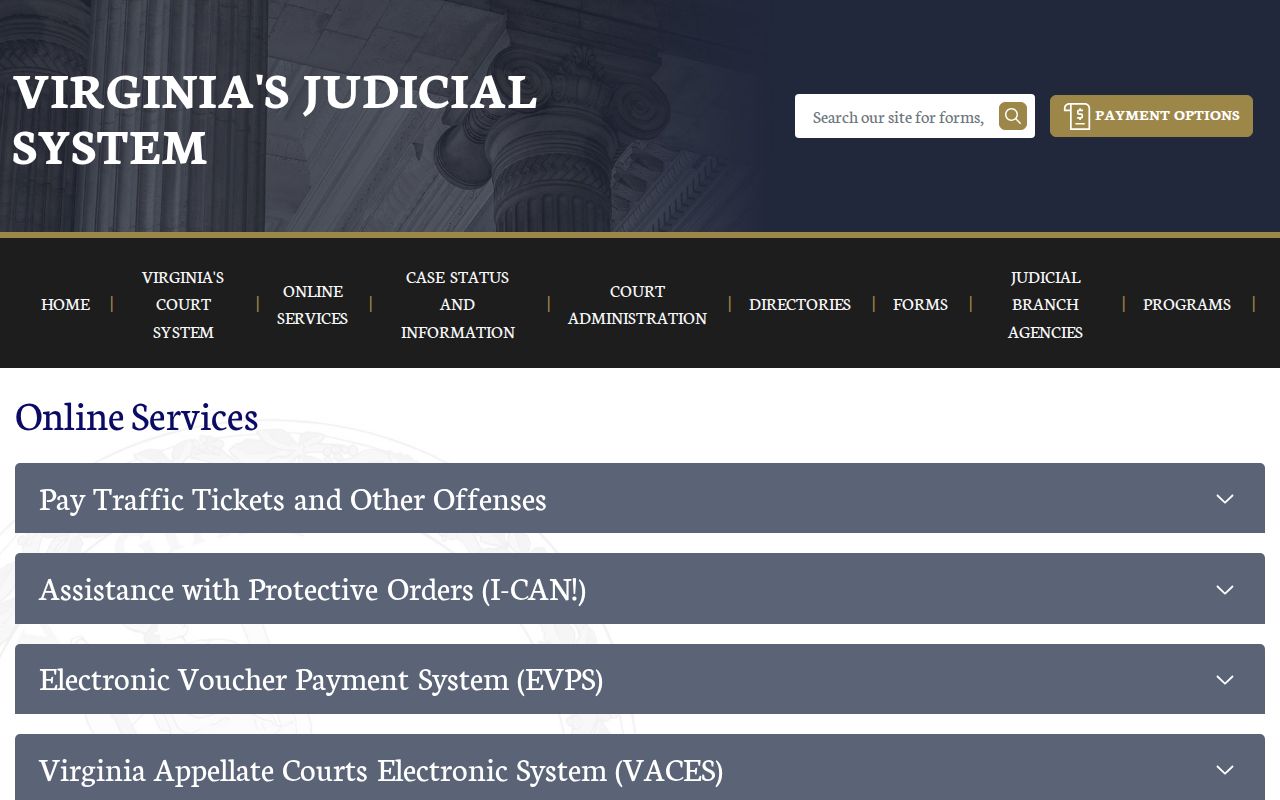
Use the SRA land index for recorded conveyances. A court docket alone is not the final deed. For a pre-1966 transfer, the current SRA result may end before the event you need.
Russell's historical deed books begin in 1787. The general indexes run through 1917. Chancery files may explain a partition, estate, or title dispute. Follow the index by party name and book reference. Then compare the land description with the modern parcel. The 1872 fire destroyed Will Book 1 and most loose papers. Treat a missing supporting file as a known gap. That gap is not proof that an owner or transfer never existed.
A Tax-Sale Listing Does Not Answer Who Owns the Parcel
A delinquent-tax notice is not a transfer. It flags a parcel for a legal process that may not be finished. Russell County tax-sale research can pull together the Treasurer's balance, a Circuit Court bill in equity, published notices, the decree, and any redemption. The recorded deed can be pulled in as well. Virginia law sets a general timing framework once taxes go delinquent. It builds in notice and redemption protections along the way. A current notice is date-specific. An auction listing alone tells you nothing firm about the buyer or the former owner.
Pull the most recent deed once the sale process wraps up. Confirm it matches the same GPIN or legal description. The sale may still be pending. Redemption may still be open. The tax file and the court record may explain why the assessment name has not moved. A tax bill is not a title certificate. Neither is a GIS label or a published sale notice.
Older Russell County Ownership Starts in the Deed Books
Older ownership questions start in the deed books. A former owner does not always surface in the online index. The Library of Virginia holds Russell County general deed indexes from 1787 through 1917 and deed books running to 1902. Surveyors' books and land-entry books help bridge the gap. The address can be modern while the deed is not. The 1872 fire destroyed loose papers and the first marriage register. Many bound deed volumes still survived. A gap in a modern search never proves much. The property may well have had an earlier recorded owner.
Inheritance changes the trail. Search chancery partitions, wills, and fiduciary records alongside the deeds. The LVA chancery collection spans 1840 to 1960, with digital images available through 1933. Those files can show why land passed to heirs or a commissioner. For the current owner question, though, a later conveyance still has to be checked.
Limits of a Russell County Owner Lookup
A public ownership result has a narrow meaning. It shows a recorded or assessed relationship to the property, nothing more. It does not confirm occupancy. It does not reveal household members, motive, or other personal details about the owner of record. Virginia's public-record rules carry exceptions. Voter details sit under separate limits. Some vital and court records stay restricted. Keep an owner-name question tied to the land interest and the public instrument behind it.
Lawful use. Use a Russell County owner lookup for property research, title preparation and civic diligence. Do not use names or mailing details to stalk, target, threaten or harass anyone, and do not mistake an owner record for proof of who occupies a home.